Showing posts with label Football. Show all posts

Friday, 28 February 2014

Sunderland v Man City - Black Cats as Underdogs is No Bad Thing


This weekend, the first bit of domestic silverware will be decided as Sunderland take on Manchester City in the League Cup final. City will of course be hot favourites but as outsiders, Sunderland will have no reason to believe the game is a foregone conclusion. Even leaving aside the fact they already have a decent recent record over their opponents, the Black Cats (and City for that matter) will be well away that finals don't always go the way they are expected.


Sunderland 1973

Indeed, It seems fitting to start with Sunderland. The Wearsiders had already pulled off a shock in the semi-final having overcome Arsenal 2-1 at Hillsborough thanks to goals from Vic Halom and Billy Hughes but few would have given them any chance of repeating the trick at Wembley. The Leeds United side of the time were one of the strongest in the country and, indeed, holders of the cup going into the final. Don Revie's charges were expected to win at a canter and certainly didn’t expect a team languishing in the division below to cause much of a problem on their way to retaining the trophy.

But Bob Stokoe’s inspired Mackems weren’t about to lay down and simply allow the Whites a procession, especially given the supposed feud between the two managers. Stokoe was to later allege that his opposite number had once tried to bribe him to lose a match while he (Stokoe) was in charge at Bury. Although the allegation was never proven, if it were true, what greater motivation could there have been for the Sunderland manager?

On the day, an Ian Porterfield half volley and a jaw-dropping double save from Jimmy Montgomery saw the Black Cats run out 1-0 winners and write their names in English football folklore. This remains Sunderland’s only major post-war honour. For now...


Southampton 1976

Possibly inspired by Sunderland’s heroics, Lawrie McMenamy’s second division Southampton side travelled to Wembley to take on Manchester United following their return to the top flight. The Reds stormed back from their shock relegation two years earlier by finishing third in First Division and of course reaching the cup final. However, in matter of weeks, Tommy Docherty went from potentially winning a historic double to ending the campaign empty handed. Having missed out on the title by a mere four points, United were then stunned by the Saints. Bobby Stokes’ late first-time snap-shot from the edge of the penalty area beat a scrambling Alex Stepney and meant that the team from the south coast were able to go home with more than just sight-seeing photos from their ‘big day out’.


Coventry 1987

Of course, upsets also occur when two teams from the same division are involved. Despite playing at the same level, finals can still throw up quite clear mismatches where one team will go in as overwhelming favourites but yet still come a cropper as their unfancied opponents still somehow prevail. In fact, this has happened on three occasions over the course of just two years.

In 1987, Tottenham, spearheaded by the free-scoring Clive Allen, were serious contenders on all three domestic fronts. However, despite a third-place league finish in the league – their best since 1971 – they were unable to prevent a rampant Everton from winning the title. In the League Cup, Spurs suffered late heart-break as they were knocked out at the semi-final stage by rivals Arsenal so were desperate to make amends at Wembley against a Coventry team who meandered to a midtable finish. Having won their previous seven, Tottenham were embarking on their eighth FA Cup Final while Coventry were about to make their first (and to date, only) appearance on the big stage.

Things were very much going to the script when Clive Allen headed home his 49th(!) goal of the season to give Spurs the lead. Undaunted, Coventry equalised through Dave Bennett a few minutes later. A scrappy Gary Mubbutt goal before half time restored Spurs’ lead but Keith Houchen’s famous flying header levelled the scores again with less than half an hour to play. The contrasting fortunes of the two clubs were certainly not evident that sunny May day as the teams couldn’t be separated after 90 minutes. In extra time however, Mabbutt was unfortunate enough to deflect a low cross high into the air. In almost slow motion, the ball looped over the head of a confused Ray Clemence to give Coventry the lead for the first time in the game. A lead they were able to hold onto as they went on to lift the trophy for the first time.


Luton 1988

The following year Wembley saw not one, but two major shocks in the domestic finals. The first came in the League Cup as holders Arsenal, on an upward trajectory after some barren years in the early eighties, set about trying to retain their trophy. George Graham’s Gunners were to be crowned champions of England in two of the next three seasons but Luton Town provided a gentle reminder that they weren’t about to have everything go their way.

Brian Stein’s opener gave the underdogs some early hope and Luton were able to hang on for most of the match. That was until two quick-fire goals from Martin Hayes and Alan Smith put Arsenal in front. Nigel Winterburn then had the chance to seal the victory from the penalty spot with just 10 minutes left on the clock but was denied by Hatters’ keeper Andy Dibble. Some hapless Arsenal defending (more on this later) led to Danny Wilson scrambling home an equaliser. The remarkable comeback was completed in the 90th minute as Stein scored his second to leave Arsenal, like their North London neighbours a year before, scratching their heads having been on the wrong end of a 3-2 scoreline.

The Hatters, under the guidance of the late Ray Hardford, were on something of a mission in the competition that year. Luton had been excluded from the previous year’s tournament after taking the radical decision to ban away fans from Kenilworth Road following the infamous riot involving Millwall fans two years prior. The Bedforshire club’s eventual success almost seemed like their destiny.


Wimbledon 1988

Despite all that drama, Luton’s win was put in the shade just three weeks later. By the time the 1988 FA Cup final came around, Wimbledon FC had been been playing league football for just over a decade and were about to complete only their second season in England’s top division. In that same short period, Liverpool had won eight league titles, one FA Cup, four league cups, and three European Cups. The Merseysiders were on course for their second League and Cup double in just three years so the South Londoners were really supposed to be no threat whatsoever to English football’s dominant force.

However, in similar vein to Luton, the Dons denied their more illustrious opponents thanks mainly to a huge penalty save. Lawrie Sanchez may have scored the winning goal, but when Dave Beasant saved John Aldridge’s 60th minute spot-kick, he not only became the first keeper in FA Cup final history to do so but also preserved the all too precious 1-0 scoreline. Bobby Gould’s ‘Crazy Gang’ hung on to win the trophy and confirm the single best post-war ascension of an English football team.

That Wimbledon no longer exist in the same form makes their fleeting success that more poetic. A tiny club that came from nowhere, had an unparalleled rise to prominence and unfortunately were eventually cruelly dismantled. With that unlikely win over Liverpool, they were able to stitch their name into the very fabric of the game in this country forever.


Birmingham 2011

Arsenal again and this time, the Gunners were flying high in the league, had just beaten Barcelona in the first leg of a Champions League tie, still in FA Cup contention and reached the League Cup final. Much was (and still is) made of the club’s trophy drought. It had been six years since silver polish at the Emirates was used on a cup on any meaningful distinction but the 2010-11 season saw Arsene Wenger’s team, for a time, fighting on all fronts. In fact, as they took to the field against a struggling Birmingham City, some optimistic souls might have even been making fanciful suggestions about winning the lot!

The first obstacle would prove to be Alex McLiesh’s Birmingham side who one might have thought would be more concerned with preserving their top flight status than a potential humiliation in a cup final. As it turned out, nobody in Blue was to be distracted. From a corner, Nicola Zigic rose higher than everyone to head Birmingham into a deserved first half lead. This seemed to spark Arsenal into life as Robin van Persie volleyed in an equaliser just before half time. The expected second half onslaught didn’t come however and as both teams were preparing for extra time, a huge Ben Foster goal kick caught Arsenal cold and Laurent Koscielny and Wojciech Szczęsny inexplicably gifted Obafemi Martins with an open goal to seal the most unlikely of victories in the dying embers of the game. Arsenal's season crumbled and they ended up with nothing to show for their efforts that year once more.

That Birmingham only won 2 of their remaining 12 league games (losing 7) only serves to emphasise how much of a shock this victory was. The Blues were subsequently relegated but a first trophy in 48 years would have certainly cushioned the blow.


Wigan 2013

Similarly, Wigan Athletic had been making something of a habit of last day survival in their all too frequent battles against relegation. Eventually, their luck would run out as they finally slipped through the trapdoor at the end of the 2012-13 campaign. However, the Latics were able to take a rather significant souvenir down with them following their unexpected 1-0 Wembley win over Manchester City.

The last few years has seen Manchester City power their way into English football’s elite, the huge investment since Sheikh Mansour’s acquisition of the club has seen them challenge for top honours season after season. The club successfully won the FA Cup in 2011 and followed it up with that unforgettable title win 12 months later. This time however, rather than benefit from a late goal, Mancini and his City team were instead punished by one as Ben Watson rose from a corner to head the ball past Joe Hart to provide an upset that arguably took on a whole different level of significance than those of the past.


With the vast resources at their disposal, the modern Manchester City have been built in such a way that 'upsets' shouldn't even be something they should be concerned with. By right, this team shouldn’t really have any weaknesses that a team like Wigan (although themselves no strangers to spending money) should be able exploit. Despite being in the same division at the time, the gulf between the two teams was arguably far greater than any of the examples above. Yet Wigan were able to find that chink in City's considerable armour and surprise us all, perhaps also offering a reminder that the game still has the capacity to throw up an interesting story now and again. This wouldn't be popular sentiment over at Eastlands but Wigan's win was a prime example of why football will always remain popular. Despite everything, the best team, no matter how strong, will not always win.

And that's exactly the kind of encouragement that Sunderland will take going into this Sunday's final.

Follow me on Twitter

Sunday, 15 September 2013

Ashley Young not the Only Villain in Football's Theatre of Cheating

The new season is still in it's infancy and we have our first major diving controversy. It's like we've never been away. Manchester United's first home win under new manager David Moyes was marred by the actions of Ashley Young who was guilty of at least one diving offence during the game against Crystal Palace. Having been already been booked for 'simulation' during the first half, Young then controversially 'won' United a penalty after going down following a challenge by The Eagles' South African midfielder Kagisho Dikcagoi. Leaving aside the fact a penalty was an incorrect decision simply because the 'foul' took place outside the box, there are questions raised over whether it was even a foul at all. As we've established, Ashley Young had no issue trying to con the ref earlier in the same game and it was only a year or so back when he was being roundly condemned following two similar incidents against QPR and his former club Aston Villa.

Defence of such incidents usually has some former pro (9 out of 10 times, it's Michael Owen) incorrectly claiming that if the contact is there, a player is 'entitled to go down'. We also hear talk of 'inviting contact' and 'drawing fouls' to attempt blur the lines even further but this merely serves to ignore the obvious point that contact does not necessary mean an offence has been committed. Dikcagoi was clumsy and he did 'touch' Young but does that really constitute a foul? Call me an idealist but until the law is changed to outlaw any physical contact in the game, I don't really see how you can justify taking a tumble based on the slightest graze from an opposition player. Are you really 'entitled to go down' if no foul is actually committed? Even when an infringement is attempted, if a player is able to stay on his feet, there shouldn't really be an encouragement for him to do otherwise.

The fact that this is open to debate shows that the battle to rid the game of such behaviour is probably already lost. Diving seems, sadly, to be a part of the fabric of the game. Stan Collymore, one the more vocal former players, wasn't shy in putting forward this view when he tweeted the following in relation to Young:


I don't necessarily buy into the “good ol' days, when men were men” soundbites usually trotted out by those who don't understand that the game has moved on significantly since the days of knee-high tackles, pitches resembling First World War trenches and terrace racism. However, Collymore has a point about the 'badge of honour'. Standing up for yourself (literally and metaphorically) was something a player would pride himself on. Not now, it seems.

Unfortunately, his argument falls apart when he brings nationality in the equation. Stating that you specifically hate seeing English players cheat suggests that you are more concerned about taking the moral high ground rather than wanting to see the problem eradicated completely.

And while we're at it, it may seem absurd to show any sympathy towards Ashley Young but why should he be the only one singled out? It's almost impossible to imagine that he will be the only player involved in a diving debate this season.

It all contributes to the prevalent culture of cheating that exists in the game. Players seek an advantage wherever they can, both fairly or unfairly - be it incorrectly claiming corners/throw ins when the ball goes out of play or time wasting to run down the clock. We've all seen incidents where attacking players deliberately play the ball into the outstretched arms of defenders to win penalties. Is that actually any worse than diving to achieve the same outcome? Genuine question.

Perceived underhand tactics rarely receive prolonged widespread condemnation. At least not to a point where anyone is likely to do anything about it. David Moyes has claimed to have had a word with Young but then again, so did Sir Alex Ferguson previously. Teams are hardly dropping, fining or selling players for their misdemeanours. Cheating in football isn't punished sufficiently and while people believe they can get away with it, it will continue to take place. As Young (and others) knows, sometimes you get the breaks, other times not. If he wins his side 2 or 3 penalties a season, I'm sure he'd be prepared to take the odd yellow card too.

Ask the fans and they'll tell you it's wrong - but only when others do it. If it's their team, you can expect some of the most tenuous interpretations of the laws in order to justify their man doing the dirty. Taking this example, you'll have Liverpool fans slaughtering Young yet defending Suarez and United fans doing the same with the protagonists reversed. Worst of all, you get some fans attempting to explain away one of their players cheating by pointing out that "everyone else is at it". The hypocrisy is enough to make your head explode.

You even sometimes hear such behaviour described as 'clever'. When this is the accepted rhetoric used, it almost feels embarrassing to try and suggest that fairness and/or sportsmanship should even be considered. The win-at-all-costs mentality means that, sadly, these two unwanted guests have no place in the modern game. Dive on.

Follow me on Twitter.

Wednesday, 8 May 2013

Thank you, and Good Knight - Sir Alex Ferguson ruined my life

Saturday May 12th 1990. A hyperactive six year old child with a slightly oversized head is running around a Camden Town council flat. He has no plan, no aim, no real sense of what is going on. All he knows is that it's the weekend and he wants to go and knock for his mates so they could go enjoy the springtime sunshine in the communal play area. Said play area doesn't feature much. A swing, a slide, but also some walls which he and his pals would like to climb and jump from, showing flagrant disregard for their own safety and well being. For all his enthusiasm however, the child was still one to be easily distracted by other things, television being the main one. That big grey box of light in the living room would so often prove to be the draw that prevented him from indulging his desire to leave the house and hone in his playful instincts.

The young lad had more than likely been awake for some hours watching cartoons and children's programmes. While his poor mum was busy shopping/cooking/attending to her two year old daughter, the big headed boy would be planted in front of the box. Today, something strange was happening. BBC One seemed to be talking an awful lot about football. “How strange” the boy figured. “football matches are only ever televised on Sunday”. It didn't take long for him to deduce that it was the FA Cup Final. The boy was slightly confused. Just a few months earlier, he had sat down to watch Nottingham Forest beat Oldham to win 'the Cup' (after which, he decided that Forest were naturally the best team in the country...nay, the world!) so why was there another final so soon? “It must be a different cup. For rubbish teams” was the unwavering conclusion he drew.

The game would feature Crystal Palace. A side from from his very own city of London. A team of plucky heroes and underdogs who had defied the odds to make it to their first ever final. The television kept saying what an amazing achievement it would be if they were to beat their opponents, some fairly average team from the north called Manchester United who never really won much themselves in those days. Naturally, the boy was swayed and, on this day alone, would be cheering on this side affectionately referred to as the Eagles. Seeing as their opponents' nickname was the 'Red Devils', the boy knew his churchgoing mother would certainly not approve of him lending his support to them. They were the bad guys and as Ghostbusters and Teenage Mutant Ninja Turtles had taught him, the bad guys always lose at the end.

Except, as we would soon discover, these bad guys didn't lose. Ever.

After a thrilling 3-3 draw, the game was set for a replay. The boy still hoped for a Palace win in the return game the following Thursday. However, as it was a school night, he wasn't allowed to stay up and watch it so the following morning when he discovered that a Lee Martin goal had settled the game in favour of 'The Devils', he was understandably, albeit temporarily disappointed (That was, of course, until something else grabbed his attention).


That was Sir Alex Ferguson's first trophy as manager of Manchester United. Even in my youthful naivety it made me somewhat miserable at the time. But it didn't matter. It was just one trophy. For a side without a particularly great recent record of success, I foolishly imagined people would barely even remember this isolated victory a year down the line. If you told me back then that I'd have to get used to it as the next 23 years of my life would be the same, I would have thought you were crazy and told everyone in school not to be your friend any more.

Curiously, such was Manchester United's level of mediocrity at the time, the accepted belief is that the United boss was on the brink of getting sacked and it was that cup win that saved his job. Appointed in 1986, the first four years of his tenure could only be described as bang average. A mid table side who would would only fleetingly flirt with with the top of the table before returning to irrelevance and obscurity. Ferguson's debut match was 2-0 league defeat to Oxford United which tells you all you need to know about the stature of the club at the time. Growing up in London back then you wouldn't have known many United fans. Nowadays, you are never more than six feet away from one. Like rats...

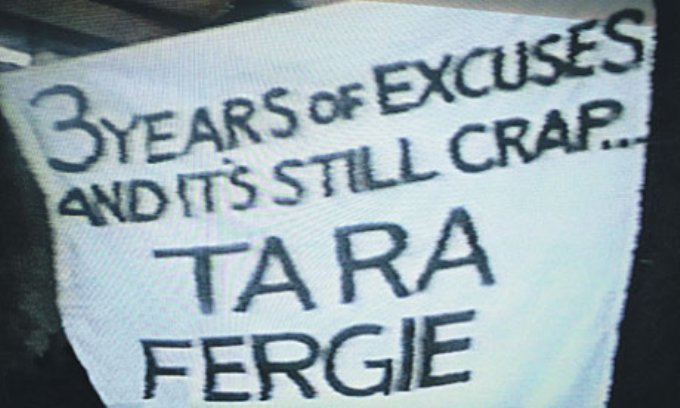
Going into 1990, there was actually a real risk of the Reds being drawn into a relegation battle. The club were on an awful run in the league having gone eight games without a win and an upcoming FA Cup 3rd round tie against the abovementioned Forest – one of the division's stronger sides – didn't look particularly enticing. As I say, it is widely believed that a loss would have seen Ferguson handed his P45. Something that would not have been an unpopular move. Three months before the Forest game, United actually lost 2-1 at home to Palace prompting one disgruntled fan to knock up a banner expressing his frustrations. Thankfully, Mark Robins popped up to score the only goal to give United a narrow win and buy Fergie some precious time. Had it not been for Robins, who knows what the future would have held for the club? Names touted to take over apparently included Terry Venables. Amazing, isn't it?

United finished the season in 13th place – a mere five points above the relegation zone and actually level on points with their cup final opponents. It's difficult to imagine Alex Ferguson would have kept his job but for the cup victory. Needless to say, it was all uphill from there. Sir Alex has since added four more FA Cup wins to his CV making him the most successful manager in the competition's history and United the most successful team with a grand total of 11 wins.

Two years later, Ferguson and United won the League Cup with a 1-0 victory over Nottingham Forest – the first in the club's long history and something he has gone on to repeat three more times. Only Brian Clough, the man he beat in 1992, has won as many as a manager.

However, the holy grail for United was, is and has always been the League. Sir Matt Busby was the last man to lead to club to championship success back in 1967 so their push in the final season of the old First Division had been a long time coming. Unfortunately for Ferguson, they were narrowly edged into second place by Leeds United.

The opportunity to win a first league title in 25 years that season was denied partly due to a late season 2-0 defeat against great rivals Liverpool. The Merseysiders themselves were at the end of a two decade run of unrivalled success which saw them rise and sit alone at the summit of the English game with 18 league titles. Well clear of Arsenal's 10 and United's 7. The history of hatred between the two clubs is extensive so it is fair to say, there would have been a fair bit of belly laughing and schadenfreude after derailing United's title bid.

Not to be deterred, the inaugural season of the Premier League in 1993 saw Ferguson, with the signing of Leeds' best player Eric Cantona, finally win that much sought after league crown and set the wheels in motion for a period of dominance that would eclipse that of the North West chums. Speaking in 2002, Ferguson unashamedly declared that his greatest challenge was “knocking Liverpool right off their fucking perch”. A motivation perhaps sparked by the fact that following that initial Premier League success, Liverpool fans, in keeping with the theme of unwisely unfurled banners, proudly suggested that Fergie's solitary title was somewhat insignificant in the grand scheme of things.


Like my 6 year old self, if only they knew what was to come...

We were sold the idea of the Premier League thinking it would open up competition, allowing different teams to grow, challenge and flourish in this new, all inclusive division. New money, new investment and an attractive new environment for players home and and abroad to thrive. “A whole new ball game” we were told. United winning the first title was actually a good thing as it gave hope to other success starved teams. “if they can do it, so can we” was the thinking. Unfortunately, the devious little Scot had other ideas. He was far from finished.

20 years and 12 more League titles later, Ferguson has not simply knocked Liverpool off their perch, he has single handedly burnt said perch to the ground. And it's not just the scousers. Everyone else in the country have been straining their necks to look over the fortress wall as Sir Alex sits in his throne, decorating himself more lavishly each passing year. None of this is by accident, though. Never afraid to let go, Ferguson has ruthlessly dismantled and rebuilt teams who have continuously remained at the forefront of the English game. Whenever it looked as though we may be thankfully seeing the end of their tyrannical reign, they would, in true super villian fashion, only came back stronger.

And it's not just domestically his presence has been felt. Following that initial FA Cup victory, two Mark Hughes goals in Rotterdam secured the European Cup Winners' Cup against Barcelona the following year. Eight years on, the Catalonian capital would be the scene of arguably Ferguson's greatest triumph. With a league title and FA Cup already in the bag, all that stood in the way of a historic treble was Bayern Munich. 1-0 down early on, Ferguson really earned his corn by throwing on substitutes Sheringham and Solskjaer late in the game and, well, you all know the story.


A nauseating outcome for the rest of us. Bitter accusations of good fortune and the whole thing being a “fluke” were levelled. But there was also the reluctant acknowledgement, as if there was any lingering doubt before, that we were seeing one of the greatest managers in the long history of the game. Despite the fact it was only United's second success in Europe's premier competition compared to Liverpool's four at the time, it was safe to assume there would be no goading banners at Anfield this time around.

Ferguson added another European crown in 2008 after beating Chelsea on penalties and has since reached two more finals – coming unstuck against brilliant Barcelona teams on both occasions, but firmly enshrining his place among the European elite.

However, despite the drive and determination that has brought him incomparable levels of success, there is an almost spiteful nature at its heart which fuels his pursuit of glory. For years, we've had to put up with the whining and complaining when things do not go his way. Referees, the media and even his own players have all felt his wrath at one time or another. The infamous 'hairdryer' iconology is a direct result of his unchallengeable approach to management, and this has even led to high profile fallings out within his own club. Many would point to his dispute with JP McManus and John Magnier leading to the deeply unpopular Glazer family running the club.


His general demeanour doesn't exactly endear him to the neutral. The desire to see United fail and concept of ABU (Anyone But United) can be attributed to primarily to Ferguson and the way he has gone about his business down the years. That said, this is what makes the man and if he didn't have this aspect of his character, he wouldn't have achieved everything he has done.

It was not simply the success which made him a great but the way in which he has responded to set backs and fought off challenges to his supremacy from a number of different foes. Like a boxer or character from a computer beat 'em up game, Ferguson has always had to adapt and refine his fighting style based on different opponents. From Kenny Dalglish and Blackburn, Kevin Keegan's Newcastle, Arsene Wenger at Arsenal, Mourinho at Chelsea, Bentiez's Liverpool and most recently, Mancini at City, the Scot has managed to rise to any challenge and leave them all in his wake. When Ferguson gets into a scrap, you can bet your life he is not walking away until he has won. In football terms, 'Sir' Alex is actually very much like a Knight of the more traditional sense; metaphorically galloping around the country on horseback laying waste to any perceived threat to his kingdom.

I refuse to believe that I am alone in having spent my entire football watching life sneering at his success but begrudgingly had to accept and acknowledge his unmatchable brilliance. The fact that many, many fans up and down the country are not able to gloat or even celebrate the retirement of the greatest manager they've ever seen but only express relief, is perhaps one of the biggest compliments that can be paid to the man.


Follow me on Twitter

Wednesday, 3 April 2013

Paolo Di Canio - Football, Fascism and Forgetfulness

Football and all that surrounds it continues to baffle and confuse. So after much to-ing and fro-ing, Paolo Di Canio has come out and denied he is a fascist. Unless you've been living in a cave for the last few days, you might have heard that the Italian has been appointed as manager of Sunderland. A struggling top flight side replacing their boss as they slip perilously close to the relegation zone would normally only cause some mild speculation as to whether he is capable of doing the job, some praise/scrutiny of his previous role and then everyone would go about their business. That is, until the day he either takes them down or keeps them up – prompting various commentators to tell you that they predicted it would turn out this way.


This time around, things are different. Paolo popping up in the north east has caused uproar and indignation the likes of which is rarely seen in the game. As a player, Di Canio excited crowds with his skill, shocked the world with one of the worst, yet absolutely hilarious, acts of indiscipline ever seen on a football pitch and scored wonderful goals time and time again. Capable of petulance and almost unheard of sportsmanship, for better or for worse, he was someone who knew how to make a headline and It would seem little has changed since swapping the pitch for the dugout. To simply say his 21 month spell in charge of Swindon Town was eventful would be bordering on a criminal understating of matters. Fighting his own players, over-exuberant celebrations and outspokenness were just part of the daily routine at The County Ground. Even after his controversial departure he still managed to cause controversy by going back and raiding the club at the dead of night for his belongings. If anyone ever had the idea to write a sitcom or movie based on a player, a lot of the source material would come from the career of this man.

However, it's not all pushing refs and kicks up the backside. As has been well documented, the former fiery Sheffield Wednesday, West Ham and Charlton hero caused something of a stir back in 2005 while playing from his hometown club Lazio when he was pictured giving straight-arm fascist salute following a match against fierce rivals Roma – the third time he'd done so after returning to Italy. Defending his actions, Di Canio apparently clarified his position when he was quoted by an Italian news agency saying that he was indeed a fascist, “but not a racist”.

It then also emerged that Di Canio made comments which appeared to endorse a certain Benito Mussolini, describing the dictator as ‘principled’ and ‘misunderstood’. He even went so far as to reinforce his admiration for Mussolini by adorning his body with a tattoo reading ‘DUX’ – a Latin translation of the ‘il Duce’ (The Leader) title bestowed onto the late Italian ruler.


Shocking revelations that have understandably caused the heated negative reaction to his installment at Sunderland. Fascism is difficult, if not impossible to define as an ideology with no universal position agreed on what it actually constitutes. In Di Canio’s native Italy, it was seen as a political position leaning very much to the far right and founded on extreme nationalism. The Italian Fascist regime of the early 1900s encompassed a number of different beliefs and ideas including but not exclusive to taking a controversial stance on race and anti-semitism.

In an era where there appears to be an effort to try and rid the game of the discrimination that continues to blight the sport as whole, condemnation has been heaped on both man and club. How can we look to continue the fight against racism, sexism and homophobia when a team will happily take on someone for whom it was believed held such beliefs?

Mussolini’s National Fascist Party also stood shoulder to shoulder with Adolf Hitler’s Nationalist Socialist German Worker’s Party and adopted many of the same Nazi policies ahead of the Second World War. To this end, Paolo's previous attempts trying to divorce fascism from racism would be quite difficult.

For the sake of balance, the pertinent question to ask is whether one can in fact be a fascist without being a racist. On a most basic level, the two can be distinguished from one another. If for no other reason, this controversy might cause one or two people to actually pick up a book and discover that there is actually a difference. Perhaps this distinction is highlighted by a particular extract from Di Canio’s book which has come to light where he discusses immigration in his home country:

“In Italy, too many immigrants come over and act as if they were back in their own countries. They make little effort to fit in and to be fair, we Italians do little to integrate them.

Our government does little for immigrants, so they do things their way. If we’re not careful, in ten years’ time Italy will be a Muslim country. I have nothing against Muslims, but I don’t want my Italian culture to disappear. If immigrants come to Italy and want to be part of Italian culture, want to be Italian, that’s great. I don’t care if they are black, yellow, pink or green. I would love it if an immigrant could come to Italy and after a few years say, ‘This is my country. I am Italian’”


A sensitive issue unquestionably but not necessarily an opinion reserved for The Blackshirts. One is free to make his or her own judgements but it is important to note that these comments aren’t even nearly as extreme as some of the anti-immigration rhetoric printed in the British tabloid press on a daily basis. We also live in a country where the popularity of UKIP is on the rise and the relationship with Muslims, as well as people from Eastern Europe, is hardly the most amicable.

Di Canio and Sunderland have gone to great lengths to defend themselves and attempted to dismiss any accusations of prejudice and political leanings in any direction. Despite these denials, the stance taken by sections of the media and fans alike to criticise him was still a commendable one… if only it wasn’t too little, too late.

Di Canio's comments about Mussolini were made in his autobiography which was published in 2000 – while he was still playing for West Ham and would go on to play in England for four more years. In isolation, a Premier League club hiring a self-confessed fascist today is of course headline news. People have been bending over backwards to have their say since he arrived on Wearside a few days ago but one must ask why people are only vocalising their dissatisfaction some 13 years after his initial admission of his position.

In addition, Paolo Di Canio had already been managing on these shores for nearly two years, in which time he wrote a column on the BBC Sport website and successfully won promotion with Swindon Town from Leagues Two to One just last season. Where were the voices of dissent were while Di Canio was busy plying his trade in Wilshire? Aside from the GMB Union withdrawing its support of the club in protest, Di Canio’s alleged political stance barely made a ripple. Instead, it was his 'wackiness' and eccentricities that dominated the headlines.


The kind of scrutiny and incessant questioning he has faced after it was announced he would be replacing Martin O’Neill at The Stadium of Light seems almost irrelevant. The time for all this was back in 2011 (or earlier!). From a cynical perspective, it's not hard to suspect that the hand-wringing is agenda driven. Simply in place to protect the ‘image’ of English football’s top division rather than any crusade against fascism. Believe what you want and behave as you wish in the lower leagues, just don’t bring it to the Premier League. We have shirts to sell.

Even after this latest not-so-swift denial from the Italian, there's just no escaping the fact that discrimination is still a hot topic after what has been a turbulent couple of years with more high profile racist incidents seeming to take place at alarming regularity. By all means, challenge Di Canio over his perceived beliefs but should he really be the prime target right now? This story, while it lasted, conveniently managed to push aside the continued controversy surrounding Rio Ferdinand. While everybody was focused on events at Sunderland, it almost went unnoticed that in Monday’s FA Cup quarter final, the Manchester United defender once again faced a hostile reception from Chelsea fans at Stamford Bridge as the ongoing saga over John Terry racially abusing brother Anton refuses to die. That's not to say the Chelsea chants were explicitly racist but you'll have to go some way to convincing me that “you know what you are” doesn't have specific implications given the circumstances and events that preceded it.

This comes off the back of England fans chanting similar and being reported by FARE for alleged racism against the same player the previous weekend in San Marino following Ferdinand's controversial withdrawal from the squad.

When incidents like this have taken place on the elsewhere – most recently, in Serbia – pundits and observers were shrieking themselves hoarse that these other countries are somehow 'backward' and need to be banned from football and such like. What is actually more worrying than the fact English football fans have been accused of similar behaviour, is the silence of these same people shouting from the rooftops to condemn others. I'm yet to see one journalist suggest England should be docked points or play matches behind closed doors if found guilty.

Instead, what you get is the oft-trotted out stock claims that “things aren’t as bad as the 70s” and that “we've come a long way since then”. True as this may be, there's no reason to pat ourselves on the back and say everything is ok. It may take place much less often but anyone who would claim we don't still have our own problems is a liar. You only need to look to the anti-Semitic chanting when West Ham traveled to Tottenham earlier this season to name but one example.

Then of course, there was the Terry case which, along with that of Luis Suarez and Patrice Evra, almost felt as though it set race relations back thirty years given the way certain people conducted themselves. The manner in which Liverpool Football Club acted was nothing short of disgraceful while the less said about the behaviour of certain Chelsea fans the better. The way the purported victims, Evra and Anton Ferdinand, ended up being demonised, causes one to wonder if some players would even bother reporting any discrimination now. It hardly seems worth it. Especially given how quick the narrative changes even when players are found guilty. Suarez is currently being talked up as a potential player of the year. The Evra incident is barely even mentioned.

Similarly, in a perverse way, Paolo Di Canio doesn't actually need to worry about the lasting effects to his reputation. His politics were almost a non-issue when he was winning the League Two title and they will be once again if he keeps Sunderland in the Premier League and performs well next season – even without his denial. That is the kind of short termism that exists in football. It's difficult to combat problems when views and opinions change with each passing game. There’s an uncomfortable sense of misguided moralising with the this story in the sense it feels as though we are only discussing it because it's convenient rather than because it's important.

Follow me on Twitter

Saturday, 30 June 2012

Euro 2012 Observations: Part Five (27th-28th June 2012)

Spain are spot on as Ronaldo is forced to pay the Penalty

The penalty shoot out. Often criticised as being cruel and an unfair way of deciding the outcome of a football match. A paradox of controlled random occurrences that more often than not prevents the better football team from success. Recently, Sepp Blatter suggested that there ought to be some better alternative to deciding games but aside from actually continuing extra time indefinitely, what could actually be more decisive than penalties? Stripping football to its most basic element - kicking a ball towards goal - is surely the best way of determining who the best team is. And of course, let's not forget the drama involved. The game is better for it.

Spain made it to their third successive tournament final by virtue of a shoot out as they defeated Portugal. It's safe to say that the penalties provided far more points of interest than the match itself which ended goalless after 120 minutes. The psychology of penalties is a curious thing. The act in itself is completely removed from the collaborative the 'team' and is one of the very rare examples in the game when it's outcome is solely down to 'the player' who is now out of his familiar comfort zone within the confines of his team. In contrast to the speed of thought and spontaneity required in a match situation, a penalty becomes more calculated as it allows the taker, and to an extent, the keeper, more time weigh up their options and to consider their move. Left or right? High or low? Power or placement? However, sometimes there might even be too much thinking involved.

And of course, one of the most beautiful things about penalties is that they require, with one rare exception, no real skill other than the ability to kick a ball.

The main talking point to emerge from this shoot out was the fact that Cristiano Ronaldo wasn't allowed/chose not to take one of Portugal's first four penalties. The reason for this is unknown but has caused no end of speculation. A lot of it based on the perhaps incorrect assumption that Ronaldo was somehow guaranteed to score. Given that Spain's first choice taker, the reliable Xabi Alonso saw his kick saved, absolutely nothing could be taken for granted.

Did he bottle it or was he gambling on the fifth penalty being the winner so he could hog the limelight? The latter view is one that many hold simply due to the fact Ronaldo's general aura would suggest he was confident of scoring whenever he would need to step up. It's safe to say that confidence is an absolute necessity when approaching the spot and ties into another theory was wasn't among the early takers. Perhaps Bento wanted to protect and alleviate the pressure on the supposedly less assured and less reliable players by making them take one earlier, saving his 'sure thing' til the end. Either way, it didn't pay off as misses by Joao Moutinho & Bruno Alves meant things didn't get that far. The former seeing his kick saved by Iker Casillas while the latter crashed his otherwise well hit shot off the underside of the cross bar. Only fractions stop us from lauding it as the superb, 'unsaveable' strike it was aspiring to be. It's the very fine margins like this that are all to often the difference between 'good' and 'bad' penalties.

Alves' kick provided another sub plot to this shoot out as he initially appeared to be set to take kick number 3 until he was stopped & replaced by Nani. You have to wonder if this had an effect on his eventual miss. The delay perhaps causing him to lose focus.

One player who remained focused was Sergio Ramos who delighted us with the aesthetically pleasing chipped penalty or 'Panenka' named after its first proponent. As a variation on the primal act of simply shooting, this is that 'rare exception' mentioned above and the closest a penalty can come to requiring any skill as it is designed merely designed to deceive the goalkeeper.

The win was ultimately sealed by Cesc Fabregas who sent his penalty beyond the despairing outstretched arm of Rui Patricio hitting the post before crossing the line to put Spain into the final. Mere centimetres to the left & it strikes the post & comes away, a few to the left & the keeper saves it. Those ever so fine margins once again come into play.

Despite failing to sparkle during the game and, in the view of many, throughout the tournament as a whole, Spain could now find themselves winning a third successive international competition and, if they haven't done so already, establish themselves as one of football's all time great sides. All they have to do is get the better of the only other team in these Championships they've played so far and failed to beat.

Super Mario's star power too much for Germany

To the shock of many, the Spain will go into Sunday's final, not to face Germany but, square off against Italy and the mercurial Mario Balotelli. The controversial striker made a late play for a staring role as one one the players of the tournament with an inspired performance that yeilded two ultimately decisive goals to oust the much fancied Germans and leave his country just one game from glory. His first goal came as a result of a fine header following some wonderful footwork from his strike partner Antonio Cassano who also provided the cross. 10 minutes before half time a wonderful ball from Riccardo Motolivo found Balotelli poised 25 yards from goal before unleashing a spectacular shot into the top corner that left Manuel Nauer rooted.

'Super' Mario has had something of an interesting 12 months. Last Summer on tour in the States with Manchester City he made the headlines for a very public falling out with his manager following a hilariously failed attempt to pirouette/back-heel a goal during a friendly. Just a few months later he scored a brace in City's now famous 6-1 win over crosstown rivals United in their own backyard. In January came the game against Spurs when he appeared to stamp on the head of Scott Parker, escaped immediate punishment and went on to score the winning goal from the penalty spot in the last minute. Then came more rumours of fallings out with his teammates before what can only be described as a counter-productive and reckless contribution to the crucial match against Arsenal that saw him see red. After it was suggested that Roberto Mancini had reached the end of his tether and was prepared to sell his fellow countryman, Mario somehow re-emerged to make telling contribution to City's dramatic final day league win by laying on the key pass for Sergio Aguero to score the all important winning goal against QPR that May afternoon.

Apt


Then came the Euros. A lacklustre first two games resulted in Balo being dropped for the final group game against Ireland. It was in this game that he managed to come on and score one of the goals of the tournament with an an innovated scissor kick that Irish defender John O'Shea STILL cant comprehend. However, rather than simply enjoying the moment, 'Mad' Mario instead provided us with one of the images of the competition as teammate Leonardo Bonucci had to physically prevent him from verbally abusing manger Cesare Prandelli for daring to leave him out of the starting line up. Balotelli showed more glimpses of brilliance against England and while he was unfortunate not to convert in the match, he did score in the subsequent penalty shootout to help set up the showdown with Germany.

Balotelli's life and career are both subject to considerable attention. He is one of football's few 'characters' and even before moving to England, made almost as many headlines off the pitch as he had on it. Although as you can see, even without the stories of fireworks in his bathroom or driving into women's prisons, his football is still enough to keep you interested. Capable of both genius and misadventure, the man Jose Mourinho once described as 'unmanageable' invokes a fascination not seen on these shores since a previous Manchester based striker in Eric Cantona – another player whose detrimental 'mad' moments could be quite quickly forgiven as moments of inspiration were often not far away.

The next chapter of Balotelli story, one way or another, will be written on Sunday as Spain and Italy renew acquaintances.

Follow me on Twitter

Tuesday, 26 June 2012

Euro 2012 Observations: Part Four (21st-24th June 2012)

Parts one, two and three

Cristiano sends away blank Czechs

Cristiano Ronaldo
took centre stage once again as Portgual took their place in the semi finals with a 1-0 win over a feeble Czech Republic side. After an opening day pasting at the hands of Russia, Czech manager Michal Bilek understandably decided to err of the side of caution and in subsequent games, his team have been content to sit back and attempt to hit the opposition on the counter. Up until this point, it has largely been successful. However, they took the extreme against Portugal and didn't make any great attempt to utilise the abovementioned counter attacking strategy that has seen them make it this far. The previously adventurous wide men Petr Jiracek and Vaclav Pilar were virtually spectators. They seemed determined to try and simply contain for the duration and hopefully take their chance with a penalty shoot out. It is easy to knock this game plan but history is littered with examples of its success. But alas, while it may have worked for sides in the past, you don't need me to tell you how risky it is a gameplan. Particularly when you are up against one of the two current best players in the world.

Despite the Czechs approach, Portugal still managed to carve them open with somewhat embarrassing ease. Ronaldo was in irresistible form despite his personal duel with the frame of the goal. The speed of his feet and intelligent movement meant that the Czech defence were unable to get near him despite attempts to double or sometimes triple mark him. Yet given all the attention on what he does with the ball, his goal actually came from a superb diving header which only served to both emphasise and justify the plaudits he receives when people identify him as the most complete player in world football. It was heartening to see his celebrated by the watching Eusabio and Luis Figo. The two Portuguese greats of years past shared an embrace as the heir to their throne put Portugal into the semi final. While they will eternally remain legends in their own right, Ronaldo will be looking to do what both men were unable to in their otherwise illustrious respective careers by actually delivering a senior international trophy for his country.

While Ronaldo was once again the star, it would be disingenuous to suggest that they are a one man team. Without the supporting cast around him to play in a way that allows him to flourish, there's no way they would still be in the competition. Joao Moutinho has been magnificent in his midfield role. Disciplined when he needs to be, but also a creative outlet as he roams in behind the forward line. It was his cross from the right that led to the decisive goal. One area of concern would be the defence. Pepe and Bruno Alves have rarely looked assured as a centre back pairing and the fact that this was their first clean sheet of the competition is more to with the Czechs lack of ambition than any kind of solid defence display.

They face now face Spain for a place in the final and while they go in as underdogs, it's certainly worth repeating that Ronaldo's form and the confidence generated throughout the rest of the team could certainly prove to be a catalyst for a potential upset.

Greece still in Euro woe after being unable to accept Germany's change

Greece v Germany turned out to be the mismatch every preview promised it would be. The Germans ruthless dumped the Greece out of the Euros much like... [nope. Not going there. Sticking to football.] The 4-2 scoreline flattered a Greek team that were overwhelmed from the first whistle. Joachim Loew elected to rest his entire first choice forward line of Thomas Muller, Mario Gomez and Luckas Podolski, replacing them with the young and hungry Marco Reus and Andre Schurrle who supported the evergreen Miroslav Klose. Loew may well have presented himself with the most welcome of selection headaches as the understudies came in and performed as admirably as those were selected in favour of. Schurrle had a goal disallowed within three minutes, Klose powered in a header to put Germany 3-1 ahead and Reus hammered in an empathic volley to make it 4-1. Selections vindicated.

Equally as good as the front three was the midfield trio of Mesut Ozil, Sami Khedira and Bastian Schweinsteiger. Ozil and Schweinsteiger were as good as could be expected facing a far inferior side – weaving in and out, creating openings and rarely looking troubled by a Greek midfield that was so out of it's depth they almost drowned. Special praise is reserved for Khedira who capped off a fine performance with arguably the goal of the game; a vicious volley into the roof of the net from a Jerome Boateng cross. I say 'arguably' as the game was full of great goals. There are few strikers who could have scored the kind of goal left back Philip Lahm did to open the scoring while if most teams had produced the wonderful sweeping move that led to Georgious Samaras' equaliser for Greece, we'd be lauding it as one of the great team goals of the competition. Then, of course, there was Rues' rocket.

While the result and arguably the scoreline were no surprise, the evident strength in depth throughout the German squad was something that would have probably surprised many. The seamless way in which the newer players were able to integrate so easily is both impressive and somewhat scary. Weaknesses, if any exist, a few and far between and it is for this reason many people now view Loew's team as favourites for the competition rather than Spain.

Spain reign once again in Ukraine despite accusations of being mundane.

Speaking of whom, in a continuing theme from the last blog post, it now seems to have become fashionable or the 'in thing' to criticise and label them as boring. This is in part due to one of the most dire games in the competition to date as they did away with an unambitious France team without really breaking a sweat. For those that managed to stay awake, what you would have seen was a simple procession of Spain doing what they do best in retaining possession. Aside from the fantastic run and cross by Jordi Alba for Xabi Alonso headed opening goal and the quick feet of Pedro to draw a last minute foul and penalty (which Alonso duly dispatched) there was literally nothing of note to report from the match.

The onus was on France to try and deny them the time and space to pass the ball among themselves at will – something their ultra-defensive approach combined with a disgraceful lack of effort didn't seem to allow them to do. Laurent Blanc decided to field not just one, but two right backs – Debuchy and Reveilleire. Yet Spain's marauding Jordi Alba was able to get away from both before hanging a ball over to Alonso, a supposed holding midfielder, who was unmarked in the box, to open the scoring.

On very few occasions was there a French player even willing to try and press the Spanish pass masters. This often meant that the likes of Karim Benzema and Frank Ribery – both of whom have had a poor tournament after so much hope and expectation – found themselves dropping so deep they were unable to create anything the few times they actually managed to find themselves in possession of the ball. France barely played like a team that had come into the tournament on a 21 game unbeaten run and with more talk of arguments and bickering among the squad, it's little surprise they'll heading home with their tails between their legs once more. Lessons of the last World Cup still go unlearned.

As I say, it is now fashionable to criticise the Spanish. The ability to retain possession seemingly now does not win over fans. I wonder if these same fans simply expect Spain to just needlessly give the ball away to the opposition for the sake of 'entertainment'. While it admittedly didn't provide for any sort of spectacle, there was little wrong with what they did. I know that the current World and European Champions don't need me to defend them but if France didn't come to play, then why should Spain? In tournament football, three games in a week, it makes perfect for Spain to stay in second gear, maintain a slower tempo and get the required result. We'd all like to see them take the handbrake off but from a purely strategic and tactical point of view, Vincente Del Bosque will be rightly satisfied to see his side not overly exert themselves unnecessarily. As a result, they will probably be the freshest of all four teams going into the semi finals.

Andrea Pirl's on the misery for England

And so the first 0-0 of the competition, came, almost unsurprisingly, between Italy and England. In a game lacking goals, possession was once again the talking point. Italy had it, England couldn't seem to keep it. The same old English failings reared their head once more, primarily the belief that grit, determination, resilience and at times, desperate defending make up for a complete lack of skill, creativity and basic technical ability. Scott Parker and James Milner running themselves into the ground is not really a sound approach for trying to win football matches let alone major international tournaments. It is worth considering however that recently appointed Roy Hodgson has only really been able to play the hand he's been dealt. It's understandable that with such little pre tournament preparation he would simply take a more disciplined, organised, risk free approach especially given the players, and their limitations, at his disposal. That said, there's no excusing the players for their inability to either keep, or do something worthwhile when fleetingly actually being in possession.

Italy on the other hand seemed some way more accomplished on the ball. While everyone is rightly praising yet another Andrea Pirlo masterclass, Riccardo Montolivo playing in a more advanced role also put in an eye-catching display using the ball well and always looking to make something happen in the final third.

Stats are not always an honest reflection of what happens in a game but the fact that the top eight players who attempted the most passes in the game were all Italian gives an impression of how dominant the Azzuri were with the ball. The gulf in class was all too obvious even if the scoreboard didn't reflect it. It was only due to some truly abominable finishing by the Italians that England weren't on the receiving end of a truly humiliating scoreline. But then again, might that have been preferable to yet more penalty heartache?

Follow me on Twitter

Thursday, 21 June 2012

Euro 2012 Observations: Part Three (16th-19th June 2012)


GROUP A

Greece Lightening ruins Russia's Summer Nights

Once again Greece have gone and left us all scratching our heads and simply asking 'how?' as they somehow managed to pull off an unlikely win and navigate their way into the last eight following a smash and grab win over a much fancied Russian outfit. After two impressive performances leading into the final group game, it was very much expected that the Russians wouldn't face much of a challenge from the Greeks and see themselves safely through. Even after the match had begun there was little indication to expect anything else. Andrei Arshavin and Alan Dzagoev seemed to have picked up where they left off previously and with an inspired Yuri Zhirkov bombing on, they forced their opponents further and further into retreat. A goal seemed inevitable and eventually it came - only not from Russia. A lapse in concentration at the end of the first half from the abovementioned Zhirkov allowed one of football's most unlikely legends to pounce on an extremely rare Greek chance and score the decisive goal to seal the fate of Dick Advocat's side.

They may have given the world Maths, Philosophy and some kick-ass cuisine but let's be honest, history is hardly awash with any particularly brilliant Greek footballers down the years. Despite being a key part of the success of 2004, the name Nikos Dabizas still prompts a snigger among fans over here who saw him ply his trade for firstly Newcastle then Leicester. Newly crowned champions of England Manchester City still consider Georgios Samaras to be the punchline of an awful joke reminding them of the years before Sheik Mansour's millions. Step forward Captain Giorgous Karagounis. Not exactly among the all-time football greats but if you are looking for a true Greek hero, he's your man. After famously scoring the first goal of the 2004 run to the final in Portugal, now, in what could well be his last ever match, he not only equalled the record number of appearances by a Greek international but also scored a goal that momentarily lifted an entire nation in a time of crisis. Of course, football isn't going to solve any of the country's problems but as the man himself said post match, the win will have put a rare smile on the faces of his countrymen and women.

Nothing encapsulated his passion more than when he was wrongly booked for diving in the second half. Choosing not to hide his indignation, Karagounis stormed around the pitch enraged, fired up and snarling until manager Fernando Santos saw fit to substitute him. The yellow card unfortunately means he misses the Quarter final against Germany when many expect a Greek defeat. At 35, it's highly unlikely we'll ever see the Panathinaikos legend represent his country again, sadly.


Bouncing Czechs prevents Pole dancing into Quarters

Joining them in the last eight will be the Czechs who beat and eliminated Poland thanks to Petr Jiracek's second goal in as many games. Unimpressive thus far and with a squad not nearly as good as those that reached the final and semis in 1996 and 2004 respectively, progression beyond the first round is something of surprise. There's nothing to take from the group games to suggest they will do much against better sides and while stranger things have happened, I very much doubt there will be any partying in Prague beyond this Thursday's encounter with Portugal. Far from an awful side – Tomas Hubschman in midfield and the exciting, direct Vaclav Pilar cutting in from wide areas have looked the most impressive – the counter attack seems to be their only strategy but one that you would expect the Portuguese, as well as others, to be able to combat.

It was disappointing to see the hosts exit the tournament at such an early stage but once again, it was their finishing that ultimately let them down. A bright start saw the Poles create a number of chances but found more joy hitting the side netting (three times) than troubling the previously erratic Petr Cech. I wonder if there's a Polish translation for the football cliché “goals win games” because whoever replaces outgoing manager Franciszek Smuda would do well to relay that to Robert Lewandowski et al ahead of the upcoming World Cup qualifiers.


GROUP B

Bratwusrt > Bacon

Germany ended the first round as the only team with maximum points from their group games after beating a resolute Denmark side thanks to goals from Lukas Podolski and substitute Lars Bender. After the new Arsenal signing had given the Germans the lead, an equaliser came after a clever corner routine saw Niklas Bendtner pulling away from the danger area, drift away from the goal and win a header that set up Martin Krone-Dehli who nodded home from close range. Seemingly content with the draw they believed would be enough to progress, Denmark seemed content to contain Germany when the scores were level. However, as it became evident they required a victory, they were forced to open up and like a great white shark, the Germans took full advantage to send the Danes home. An unfortunate outcome given that their two better performances, in this match and previously against Portugal, have resulted in defeats following their somewhat fortunate win over a wasteful Dutch side.

Portugal Ron their way after Dutch vans break down

Speaking of whom, Bert van Marwijik's misfits went home with their tails between their legs following a 2-1 defeat to Portugal – their third successive defeat and grand total of nil points in the group. To say their early exit was unexpected would be an understatement. I know I'm not alone in wondering how a team packed full of talent went out without putting up any kind of fight. Reports of divisions in the squad were unsurprising in the sense that we've seen it all before from this team down the years yet also surprising as one would think they would have learned some sort of lesson by now. Evidently not.

Despite taking the lead through a fantastic Rafael van Der Vaart effort after Arjen Robben finally decide to reap the benefits of acknowledging that he had teammates, the Dutch failed to capitalise. Going a goal down actually galvanised Portugal and the story of the match was as much about their resurgence than Holland's failings.

Van Marwijk elected to leave out Mark van Bommell for the abovementioned van Der Vaart. While his decision was vindicated as the Spurs man scored, the more attack minded approach left Nigel de Jong horribly exposed in the middle of the park. This allowed the Portugal midfield trio of Miguel Veloso, Joao Moutinho and Raul Meireles to have a field day, distributing the ball far too often to the wide men Nani and the star of the show Cristiano Ronaldo who finally decided to show up on the big stage for his country. The Real Madrid man scored the two key goals and put in the kind of performance the Madridistas at the Santiago Bernabeu are used to seeing on a regular basis.

After justified criticisms of his two previous matches, Ronaldo set out to prove a point by tormenting Holland right back Gregory van der Weil with embarrassing regularity. After another outrageous season in Spain – 60 goals in 55 games – many will be suggesting that this kind of display is long overdue. Not many people fancied Portugal before the competition begun but if their talisman can continue in the same vain, there aren't many, if any, defences left that will be able to stop him. Dark horses? Maybe.


GROUP C

Jesus saves as Spain avoid paying the Bil

Spain predictably negotiated their way into the last eight following a narrow victory over a hard working Croatia side who might count themselves somewhat unlucky to be going home from the competition early. While the Ibreians, as expected, controlled possession, dictated the play and never found themselves on the backfoot for any prolonged period of time, the Croats certainly battled hard to keep them at bay with a committed and disciplined defensive display that restricted the current World and European champions from creating many clear cut openings. Slavan Bilic reverted to 4-2-3-1 with Ivan Rakitic and Ognjen Vukojevic tasked with, and succeeding in denying the narrow Spanish creative hub of Xavi, Andres Iniesta and David Silva any space to weave their creative patterns for an ultimately lonesome Fernando Torres up front. The extra defensive midfielder for Croatia freed up their own creative influence in Luka Modric who, for the fleeting touches he was allowed, had an excellent game.

In fact, the best chance of the match came as result of a rare foray by Modric who found himself in space on the right side of the penalty area and played an exquisite outside foot cross to Rakitic who could only head straight at Iker Casillas in the Spanish goal - A chance they would come to rue as Jesus Navas proved to be the Spanish Messiah after coming off the bench to score the all important winner. Croatia were crucified with just 5 minutes left on the clock. 

Given the initial resilience of the opposition, Spain needed to remain patient before finding their breakthrough. After withdrawing the ineffectual Torres and reverting to the now famous 'false 9' formation, it was his replacement Cesc Fabregas who saw fit to outdo Modric's sublime earlier pass with an even more outrageous dink to Iniesta who squared for Navas to smash home. A truly special team goal worthy of winning any game, albeit with a slight hint of offside.

In some quarters I've seen Spain inexplicably criticised for not doing more with their possession and even been described as boring! But I guess this is what happens when stupid people are given nice things. Presented with a team who have earned the right to ranked up alongside the great Brazil and Dutch sides of a generation ago, people still have cause to complain. Yes, for their dominance they could probably create more and maybe score more goals but not beating every team by four or five is hardly a reason to slate a team that, in terms of pure aesthetically pleasing football, cannot be touched.

I guess all the critics of Spain derive more joy from watching Ireland.

Ireland Given a lesson as Super Mario makes A-zure of Italian qualification

To be fair, they weren't as bad in their 2-0 defeat against Italy as they were in their opening two matches and despite the Italians still being the better side, the Irish gave a better account of themselves than we had seen previously. In fact, the most disappointing player on the team was the usually reliable Shay Given. Having suffered something of a nightmare against Croatia, Given could not be faulted for any of the goals against a rampant Spain after getting no help from his defence. However, the long serving keeper was guilty of not one, not two but three errors that led to Italy's first goal. Firstly, Charging out hastily to allow Antonio Di Natalie to go round him and get a shot on goal. Secondly, spilling a routine catch from Claudio Marchiso in the follow up to concede a corner and finally, from said corner, flailing at Antonio Cassano's header that eventually gave the Azzuri the lead.

These mistakes were totally uncharacteristic of a goalkeeper of Given's usual quality. There have been suggestions in some quarters that he wasn't 100% fit coming into the tournament which may well explain his hapless displays or this could just be a convenient excuse for the fact it would appear that time is finally catching up on him. Aston Villa and Paul Lambert will be hoping it's the former ahead of the new campaign.

If Given was at fault for the first, it would be harsh to attribute any blame to him for the second as Mario Balotelli, relegated to the bench for the game, set out to prove a point after being introduced by scoring an incredible, powerful scissor kick volley late on. What followed were comical scenes as Mad Mario then attempted to direct a second volley – this time one of abuse – at his manager Cesare Prandelli for having temerity to leave him on the bench. Only Leonardo Bonucci's intervention prevented any confrontation as he has to literally physically gag his countryman. Only Balotelli, eh?

At the time, it was probably goal of the tournament. However, it was to be bettered 24 hours later...


GROUP D

Ibracadabra! Zlatan magic gives France Les Bleus

What is it with controversial strikers and stunning volleys? Zlatan Ibrahimovic looked at his old pal Mario's strike against Ireland and decided he would join the party with a stunner against France to set Sweden on their way to a surprise 2-0 win. Sebastian Larsson dinked a cross to the edge of the 18 yard box where Ibrahimovic was poised like a coiled spring before exploding with one of the most technically brilliant scissor kicks you are ever likely to see. The ball whistled it's way beyond a despairing Hugo Lloris to give Sweden a second half lead. The spectacular nature of the goal served as a massive middle finger to the critics who seem to draw their conclusions about him without ever really seeing him play. Having just completed his most prolific season at Milan with 34 goals in 43 appearances, and having scored 2 in 3 for a poor Sweden side in this competition, feel free tell anybody who thinks he's “shit” that maybe they out to start watching him a bit more closely.

Ordinarily, Man of the Match Larsson's own volley to make it 2-0 would have won more plaudits but for Zlatan's majestic strike. The result meant Sweden do not go home empty handed but more crucially, a toothless France team now finish second in the group and face Spain in the quarter finals where they cannot afford another limp performance or else it will be au revoir for Laurent Blanc's team.

Fortunate England avoid pain in Ukraine as they tech their chance

France's defeat means that England somehow win Group D following a rather unconvincing 1-0 victory over hosts Ukraine. The returning Wayne Rooney scored from all of 3cm from a Steven Gerrard cross (again) at the start of the second half in a match where the result certainly masks a lot of what was, at times, incredibly tedious and unenjoyable to watch. The overriding belief is that England defended well but if the 16 shots on goal Ukraine when allowed is an example of 'good' defending, I’m sure I wont be the only one concerned when England add 'bad' defending to their inability to retain any meaningful possession.

The defeat saw the home side eliminated in a game where they looked far more competent on the ball and more technically superior on the ball than their supposedly more illustrious opponents. Andriy Yarmolenko proved something a thorn in England's side and with a bit more experience might have actually punished Roy Hodgson's men. The hosts may well have actually taken something from the game when Marko Devic's deflected was hooked away from goal by a retreating John Terry – the only problem was that the ball had already crossed the line but this minor incident happened to be missed by the referee, the linesman and the extra official standing on the goal line tasked with actually making sure mistakes like this don't get missed.

In this country, we have convinced ourselves that because of the great injustice against Germany two years ago, this incident is some kind of...erm.... payback? And of course, the controversy has led to the reopening of the tiresome debate regarding goalline technology. Sepp Blatter has now called it a “necessity” ignoring the fact that any mooted technology that would have rightly given the goal wouldn't have picked up on the fact that Artem Milevskiy was actually in an offside position during the build up to the chance.

What next? 'Offside technology'? If that's the case then you could easily present a case for 'shirt-pulling' technology, 'incorrectly awarded goal-kick technology' and 'corner kick not taken exactly on the curve of the quadrant technology'. Of all the football matches that take place all over the world every single waking hour of the day, how often do these contentious goal line incidents actually occur? I would guess at less than 0.001% if that so why waste time with the addition of machines, censors and cameras messing around with the very essence of the game? Where will it end?

Referees of the future?

Follow me on Twitter

Saturday, 16 June 2012

Euro 2012 Observations: Part Two (12th-15th June 2012)


GROUP A 

Czech-ing In!

The second round of games kicked off in Group A with the Czech Republic going some way to right the wrongs of their opening day hammering at the hands of Russia. Petr Jiracek and Vaclav Pilar's early strikes allowed them to relax and see out a victory without needing to get out of second gear. The only scare came when a horrific Petr Cech error allowed Fanis Gekas to give the Greeks something of a lifeline at the start of the second half. Again, it is baffling to see one of the best goalkeepers of a generation perform so badly when representing his country. His butter-fingery here was reminiscent of the cross he mishandled four years ago against Turkey which ultimately led to the Czechs being eliminated at the group stages. On the face of it, this faux pas does not look as costly but when goal difference could prove so decisive in these tight groups, the spill may not look too clever come Sunday morning.

On a similar note, it was curious to see the Czezhs happy to settle for the narrow win rather than push on for more goals. The ease with which they carved open the Greek defence at the start of the game suggested they could have easily racked up a far more handsome scoreline. The two quick-fire goals they scored in the opening six minutes should have been something of a catalyst or springboard to cancel out the deficit suffered in that Russia game. Instead,Tomas Hubschman's through ball for the opener and the adventurous overlap by Theodor Gebre Selassie to set up the killer second proved only to be fleeting examples of a quick, direct style that surely would have been more fruitful had they been brave enough to continue it throughout the match.

Greece's defending for the opening two goals was atrocious. One could almost suspect that they were fed up of all the unfair criticism they received for the rigid, solid, defensive approach that made them a success four years ago and decided to abandon any sense of discipline in an attempt to shed themselves of that perceived negative tag. In fairness, they could well have found their way back into the game after a strong second half display. A striker younger than Giorgos Karagounis or one better than Georgios Samaras might have yeilded greater rewards in advanced positions.

The bum's Russ

Russia and Poland renewed pleasantries both on and off the pitch in the later game on Tuesday. The violent scenes of both sets off fans kicking seven bells of shit all over the streets of Warsaw pre and post match will turn out to be some of the lasting images of the tournament. It would be easy to write off the ruckus purely as hooliganism but given the long, complex political history between these two nations, the strength of feeling on both sides is almost understandable. Whether that condones what we saw is obviously open to debate. On the pitch, Poland once again played with the kind of attacking endeavour that should have seen them do better against Greece last week.

Once again, however, a lack of cutting edge in the final third meant they had to be content with a 1-1 draw. The Russians were once again looking to exploit the openness of their opponents with some slick Andrei Arshavin inspired counter attacking. However, with an out of sorts Aleksandr Kerzhakov leading the line and Poland showing far more resistance than the Czechs, they were always far less likely to repeat the emphatic scoreline from the opening day. In fact, it needed an Arshavin set piece to be glanced in by Alan Dzagoev to give them the lead. The CSKA Moscow hotshot has three goals in two games so far and with his current contract reportedly expiring at the end of the calender year, seems to be using the competition to showcase his talents to any potential suitors. Already, Arsenal are rumoured to be interested.

Poland's equaliser came through a fantastic left footed strike by the unpronounceable Jakub Blaszczykowski. A true 'captain's goal' which lifted an entire nation and is undoubtedly one of the goals of the tournament so far. If, for whatever reason, you haven't seen it yet, it's certainly worth a look.


GROUP B

Bendt Double

If Blaszczykowski's rocket was goal of the tournament so far, then match of the tournament has to be the five-goal thriller between Denmark and Portugal in group B. After many a less than enthusiastic appraisal of their conservative gameplan to stifle the Germans last weekend, Portugal set out to remind the world that they still very much adhere to their attack-minded philosophy of years gone by. After a Pepe header from a corner gave them a deserved lead, Helder Postiga, a striker who struggled to find his feet during a miserable spell for Tottenham, swept in a superb second from a continuously frustrating, but sometimes incisive, Nani cross.

Another striker who has failed to set North London alight is Arsenal's wantaway striker Niklas Bendtner who pulled one back before half time before scoring what many thought to be the goal that salvaged a draw and crucial fourth group point for the Danes with 10 minutes to go. Bendtner's perception as something of a misfit in Arsenal colours is arguably down to Arsene Wenger's insistence down the years to try and play him as some sort of fleet-footed silky skilled playmaker type forward when it in fact obvious that his best position is as a centre forward target man – a position in which he thrives for his country for whom he has now scored 20 goals. Astonishingly, six of these have now been scored against Portugal. For years we have been bored to tears by everyone bemoaning Arsenal's lack of 'Plan B'. In theory, Plan B could be 'Plan Bendtner' if Wenger could be flexible enough to make him the focal point of their attack in certain situations and actually instruct his players to cross that ball properly.

It might be worth mentioning that Bendtner landed himself in hot water with UEFA by celebrating one of his goals by revealing his 'Paddy Power' sponsored underpants. A stunt well worth doing given the fact you expect the gambling firm to pay him more than enough to cover whatever meaningless fine the authorities hand down.

But I digress, Bendtner's heroics ultimately proved to be futile as Portugal substitute Silvestre Varela slammed home a brilliant goal three minutes from time to put Portugal in a fantastic position for qualification. Cue: delirium.

However, one Portuguese who may have been more relieved than ecstatic at the dramatic late win is golden boy Cristiano Ronaldo who once again somehow flattered to deceive on the international stage. During another typically unremarkable performance, Ronaldo was almost guilty of costing his team the points when at 2-1 up and presented with the kind of one-on-one chance he would ordinarily be able to score in his sleep, he put embarrassingly wide of the post. Moments later, the Danes scored their would-be equaliser.

Instead of wasting his time sniping, unprovoked, at Lionel Messi, Ronaldo will do well to start raising his performance levels for his country lest he wants to be compared to a certain Mr. Arjen Robben.

Dutch down to last life in Super Mario's World

Speaking of whom, another lacklustre showing in the orange of his native Netherlands in their 2-1 defeat against Germany means he will be facing Ronaldo in a must-win showdown on Sunday. The two men who lit up this year's Champions League semi final with their respective clubs and will now do battle for the unwanted crown of the most selfish under-performer in the tournament.

Robben's Dutch team failed to put up anything resembling a fight in their match against the old enemy and came away with exactly what they deserved; nothing. Whereas they were creating but missing chances against Denmark, the toothless nature of the Holland attack this time around meant that Germany were content to contain and keep then at arms length for much of the game. The Germans were predictably organised and used their possession both intelligently and patiently to create openings – two of which fell to much maligned Mario Gomez who didn't require much of an invitation to do what he does with curious regularity; score. Twice.

Holland improved massively after the restart but a disciplined German side prevented them creating many clear cut openings. It was only a fine long range effort by Robin van Persie that was able to finally penetrate their rivals' back line in the end but it wasn't enough and the Dutch are now on the brink of elimination.


GROUP C

Moderate  performance enough for Croatia

Italy versus Croatia was your archetypal 'game of two halves' where one side controlled the first half an the other the second resulting in a 1-1 draw that neither could really argue with. 

The Italians were the better side in the opening 45 playing with an attacking intent not usually associated with Azzuri teams of the past. The bold deployment of both Antonio Cassano and Mario Balotelli for the second game running caused the Croatian defence a number of problems with the Man City striker in particular looking very much in the mood.  Unfortunately, neither man seemed capable of breaking the deadlock for the Italians and it was left to the evergreen Andrea Pirlo to break the deadlock with a trademark free kick which outfoxed a flailing Stipe Pletikosa in the Croatia goal.

The main narrative from the game was the clash of the creative midfielders and provided an opportunity to compare and contrast the above mentioned Pirlo with the Croat's own pivot Luka Modric. It's safe to say that Pirlo won this duel with an impressive first half shift where he seemed to be at the heart of everything good this expansive Italy side were creating. It was only in the second half when Italy sat back that Modric was allowed to come into the game. However, the diminutive playmaker's underwhelming performance was a continuation of his last six months in a Spurs shirt where his loss of form coincided with the team's slump. Of course, other factors came into play but you had to think if Modric had been playing to his usual high standards, Tottenham may well have hung on to third place, qualified for the Champions League and Harry Redknapp may still be in gainful employment today. Who knows? 

Mario Mandzukic's equaliser came from a defensive lapse by Georgio Chiellini but it was no less than Croatia deserved after finally finding thier feet in the match. As predicted right here, Croatia could well find themselves progressing to the quarter finals. All they have to do to make absolutely certain is beat Spain on Monday. Simple really...

Spanish fly and leave Irish to stew

And of course, one has to ask, who are Spain, really? I mean all they managed to do against Ireland was exercise their overwhelming dominance and play the kind of sublime passing football that makes one wonder if the two teams out there were even playing the same sport.  

In a way, the 4-0 victory actually taught us very little about the defending champions. A slight formation tweak saw Vincente Del Bosque do away with the strikerless formation used against Italy and give Fernando Torres the opportunity to redeem himself following his hapless cameo in that game. Torres didn't disappoint - scoring twice in the rout before making way for Cesc Fabregas who himself scored his second of the tournament after coming on. False 9 or real nine, it really made no difference as Ireland wouldn't have had a chance if Spain had only played with 9. 

Again, I'm baffled to the point of dismay that, realising thier limitations, there seemed to be no obvious game plan from Trappatoni's team. Whereas the Spanish seemed to know what pass to make three passes in advance, Ireland found them in a state of panic on the very few occasions they were able to retain possession for more than half a second. There also seemed to be no defensive cohesion or strategy to speak of. Evidenced by the frequency with which the like of Richard Dunne and co found themselves on the turf having been continuously turned inside out by scorer of the second David Silva among others. When you lack the personnel as Ireland so obviously do, there needs to at least be an attempt to prevent embarrassment.  

It's a testament to how awful Ireland were that the only positive about the match was the unrelenting noise generated by their supporters. But as Roy Keane so aptly pointed out in the ITV studios post match, there's no point in only being out there for a sing-song. 


GROUP D

France toast after getting better of UkRAIN

France showed their class as they coasted to victory over hosts Ukraine in an otherwise unremarkable game that was only really notable for the extreme weather conditions that interrupted and delayed the the game. Thunderstorms and lightening proved very, very frightening as players were withdrawn just minutes into the game before returning an hour later. France were dominant in the first half but were unable to find the breakthrough. Ukraine's defence were given such a run around they were merely seeing a silhouette’s of the men the they were supposed to be marking. The poor boys needing sparing from the monstrosity that was the France sustained attack.

It was only a matter of time before they finally scored through Jeremy Menez and the feeling amongst the partisan home supporters was that Menez just killed a man. The French fans found somebody to love and after Johan Cabaye added a second, they were probably doing to the Fandango. Another one bit the dust in Les Bleurs 23 game unbeaten run. At this point they were having such a good time, Laurent Blanc was asking his team to don't stop (me now) but they weren't able to add to the tally. The result leaves Ukraine under pressure to win their final game while the France will be thinking that similar performances and fighting to the end will also get them to say 'we are the champions' come July 1st.

England have Swede dreams despite nightmare performance

Football can be a strange game. Sometimes the worst matches can somehow be the best. The absence of quality can lead to great excitement. Such was the case when England took on Sweden. Poor passing, dodgy defending and questionable goalkeeping lent considerable weight to the view that 'bad' football can actually be more fun to watch than good football. I think it was the Italian (obviously) Gianni Brera who said that the perfect game would end 0-0. This was the polar opposite of that mantra. A match that was the blueprint of bad football has lit up the tournament. England secured a 3-2 victory by virtue of managing to be only the second worst team on the pitch.

'Star' performers on the day were the likes of Glen Johnson, Jonas Olsen, Johan Elmander and James Milner who showed that competency is actually not a requirement for a top level footballer. Andy Carroll put England ahead with a fine header from a Steven Gerrard cross before woeful defending allowed 107 year old[citation needed] defender Olaf Melberg to TWICE score to put the Swedes 2-1 up. Roy Hodgson then showed the managerial nous that his critics would do well to acknowledge by introducing a fresh, hungry Theo Walcott to the proceedings and was rewarded as the Arsenal man first scored and then provided the assist for Danny Welbeck's improvised finish. Although, Walcott's admission that he wrongly thought his long range effort to level the scores had taken a deflection is, to me, an admission that his shot was merely hit and hope and further confirms the lack of anything resembling finesse in this game.

Sweden now exit the tournament which is probably for the best given how poorly they've played in both games while somehow England are on the brink of the quarter finals. Last Monday England drew against France thanks to a rigid, resolute defensive display. It wasn't pretty but the major positive was that the team were difficult to break down. All of that went out of the window against Sweden and while it is easy to praise the resilience to come back from a losing position, performing that badly against a better team will simply add more numbers onto those years of hurt Ian Brodie so famously sang about back in 1996.

But but least no-one can accuse England of being boring now, right?

Follow me on Twitter